Environmental Health Risk Assessment (EHRA) of PM2.5 Exposure Among Students at School
Keywords:
Environmental Health Risk Assessment, PM2.5, Risk Quotient, Students, Exposure AnalysisAbstract
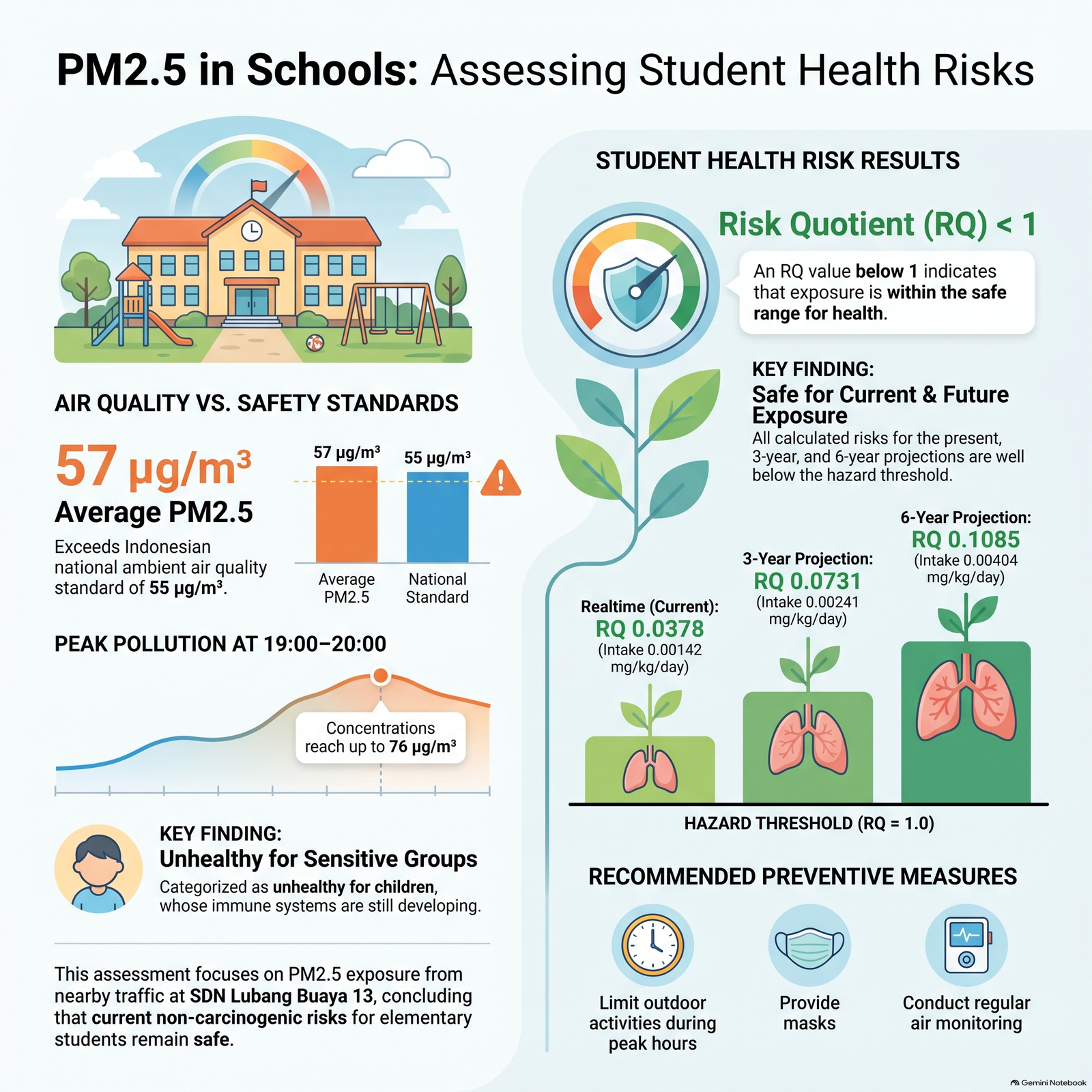
Background: Air pollution, particularly fine particulate matter (PM2.5), is one of the major environmental health issues that poses serious impacts on vulnerable groups, including elementary school children. This study aims to analyze the Environmental Health Risk Assessment (EHRA) of PM2.5 exposure among students at school. Methods: The research employed a quantitative descriptive design with a cross-sectional approach, conducted from June to August 2025. Data were collected through 24-hour PM2.5 concentration measurements using an air quality monitoring device and a questionnaire to assess students' activity patterns. Results: showed that the 24-hour PM2.5 concentration ranged from 41-76 µg/m³ with an average of 57 µg/m³, exceeding the national ambient air quality standard (55 µg/m³). The Reference Concentration (RfC) for PM2.5 was set at 0.038 mg/kg/day. Exposure assessment indicated an average realtime intake of 0.00142 mg/kg/day, 3-year projection intake of 0.00241 mg/kg/day, and 6-year projection intake of 0.00404 mg/kg/day. All Risk Quotient (RQ) values were <1, indicating that PM2.5 exposure among students is within the safe range for non-carcinogenic health risks. Conclusion: although PM2.5 exposure does not present significant non-carcinogenic health risks, preventive measures such as limiting outdoor activities, providing masks, and conducting regular air quality monitoring are recommended.