Overview of Hygiene and Sanitation of Water refill stations (WRSs) in the Urban Area
Abstract
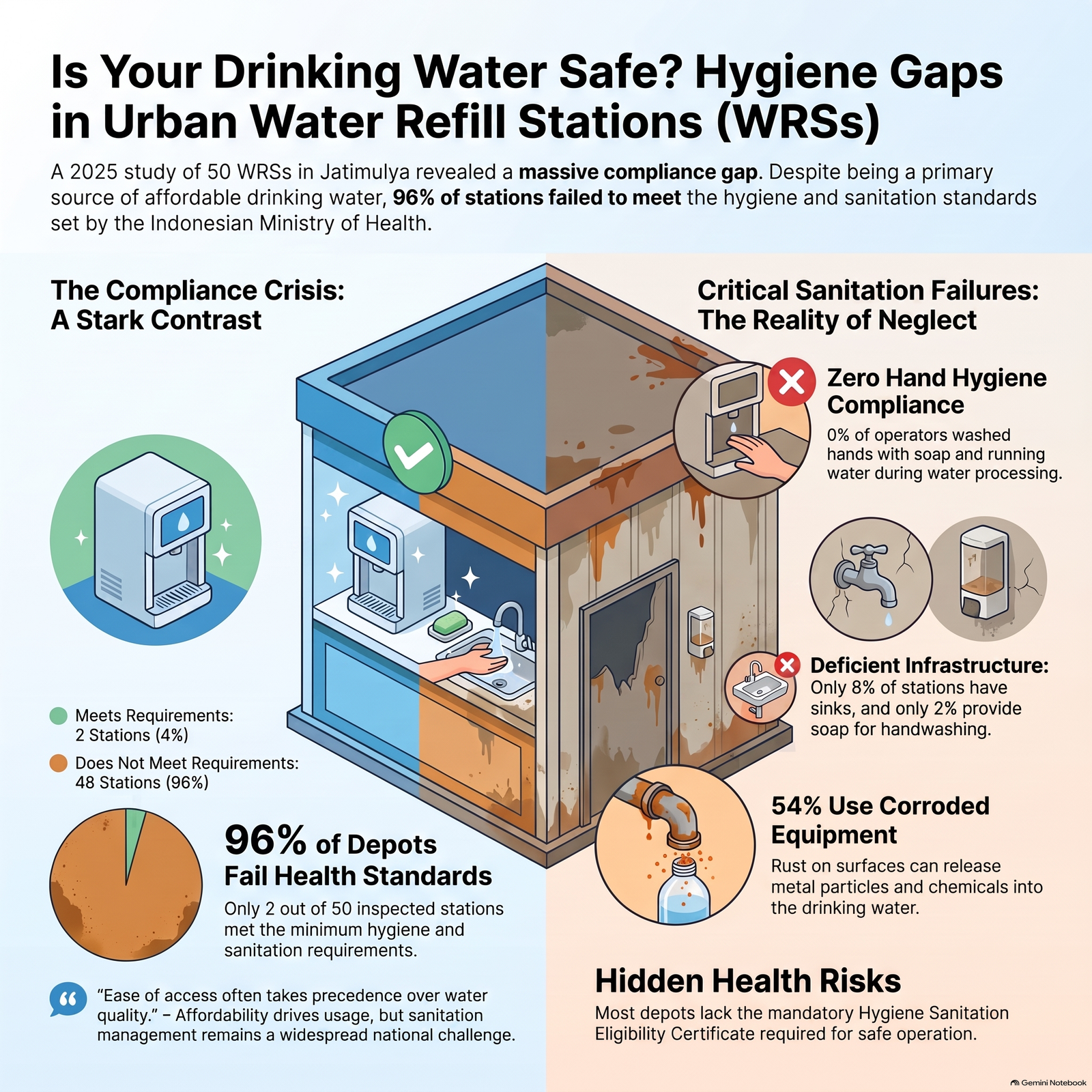
Background:Water refill stations (WRSs) are businesses that process raw water into bulk drinking water and sell it directly to consumers, and have become a popular option for meeting daily drinking-water needs because of their affordability. However, the quality of the water produced depends heavily on the hygiene and sanitation practices applied throughout processing, covering site sanitation, equipment sanitation, food-handler hygiene, and the raw water source. Methods: This was a quantitative descriptive study using a cross-sectional design. The population consisted of 58 WRSs in the Jatimulya urban area, with a sample of 50 depots selected through purposive sampling. Data were collected as primary data using an Environmental Health Inspection (EHI) sheet based on Minister of Health Regulation No. 14 of 2021. Results: The univariate analysis showed that the highest proportion of depots (96%; n = 48) did not meet the hygiene and sanitation requirements. The lowest compliance was found in handwashing facilities, waste management, and food-handler hygiene practices, particularly the availability of handwashing soap and routine operator health check-ups. Conclusion: Water refill stations (WRSs) are expected to improve hygiene and sanitation regarding the facility, equipment, food handlers, and raw water. Additionally, depot owners need to conduct routine air quality testing at a laboratory.